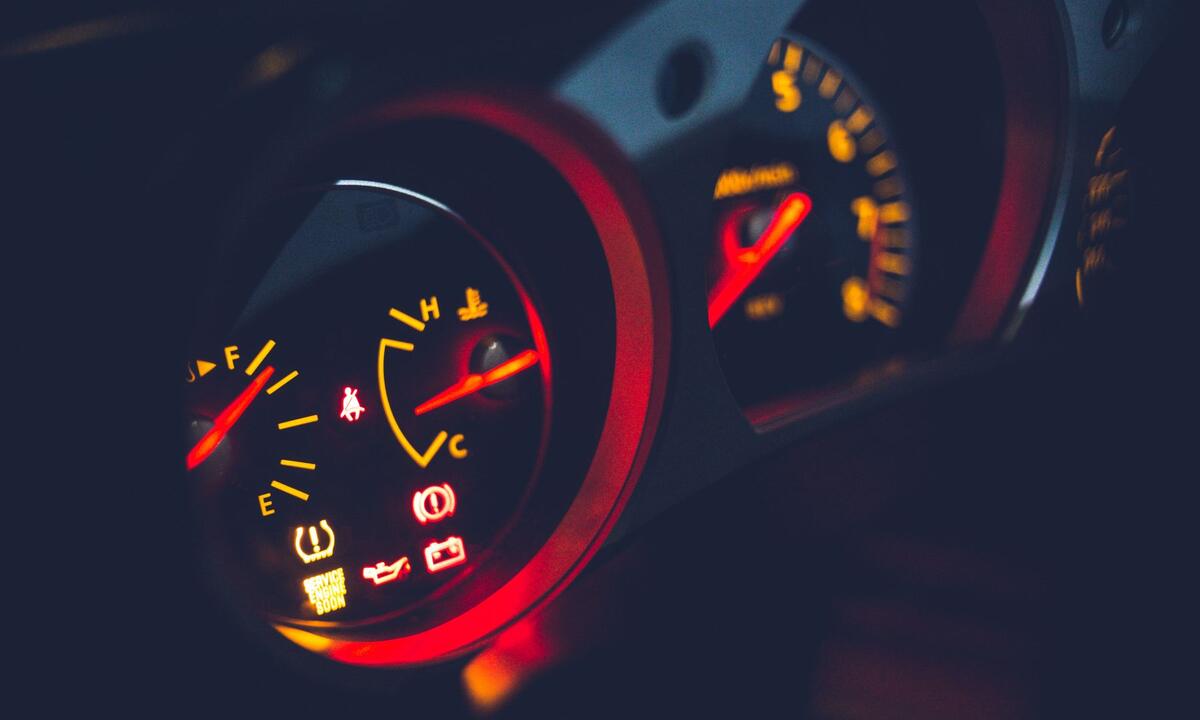
Dashboard warning lights
Tap a light to see what it means, whether you can keep driving, and what to do now. Symbols vary a little between makers, so your handbook shows the exact one for your car.
Red lights
Oil pressure warning lightRed oil can symbol
The engine has lost oil pressure. Stop as soon as it's safe and switch the engine off. Driving on with low oil pressure can wreck an engine within minutes.
Can I keep driving?
No. Stop and switch off. Only drive on if the oil is topped up and the light stays off.
What to do now
- Pull over safely and turn the engine off.
- Wait a few minutes, then check the oil level on the dipstick.
- If it's low, top it up with the oil your handbook lists. If the light comes back on, don't drive. Call for roadside help.
Common causes
- Low oil level from a leak or burning oil
- A worn oil pump
- A blocked oil filter or pickup
- A faulty pressure sensor
Battery or charging lightRed battery symbol
The car has stopped charging its battery, usually because of a failing alternator or a broken drive belt. You're running on the battery alone and the car can stop within minutes.
Can I keep driving?
Only a short distance to a shop or safe place. The car will stop when the battery runs flat.
What to do now
- Switch off the air conditioning, radio, heated rear window and anything else you don't need.
- Drive straight to a shop or somewhere safe, without switching the engine off on the way.
- If the temperature warning comes on too, stop. On many cars the same belt drives the water pump.
Common causes
- A failing alternator
- A broken or slipping drive belt
- Loose or corroded battery terminals
- A failing battery
Engine temperature warning lightRed thermometer in waves
The engine is overheating. Stop as soon as it's safe and switch off. Never open the radiator cap while the engine is hot.
Can I keep driving?
No. Let it cool and get it checked.
What to do now
- Pull over and switch the engine off.
- Wait at least 30 minutes before touching anything under the bonnet.
- Once it's cool, check the coolant level in the see-through tank. If it's low or you see a leak, call for roadside help rather than driving.
Common causes
- Low coolant from a leak
- A failed water pump or broken belt
- A stuck thermostat
- A radiator fan that isn't working
Brake warning lightRed (!) in a circle, or the word BRAKE
Either the handbrake is on, the brake fluid is low, or there's a fault in the brake system. If the handbrake is fully off and the light stays on, get the brakes checked before driving further.
Can I keep driving?
Not until it's checked, unless it was just the handbrake.
What to do now
- Make sure the handbrake is fully released.
- If the light stays on, check the brake fluid level in the reservoir under the bonnet.
- If the pedal feels soft, sinks or travels further than usual, don't drive. Call for help.
Common causes
- Handbrake not fully released
- Low brake fluid
- Worn brake pads
- A leak or fault in the brake system
Airbag warning lightSeated person with a circle in front, or SRS
There's a fault in the airbag or seatbelt tensioner system, so the airbags may not go off in a crash. Get it checked soon. A lit airbag light can also fail a WOF.
Can I keep driving?
Yes, but the airbags may not protect you. Get it checked soon.
What to do now
- Book a check soon with a shop that has the right scan tool.
- Don't try to fix wiring under the seats yourself. Airbag parts can go off if handled wrongly.
- Check that nothing is pressing on wiring under the front seats, like items stored there.
Common causes
- Loose connectors under the front seats
- A faulty clock spring in the steering wheel
- A seatbelt sensor fault
- A stored crash code after an accident
Check hybrid system warningRed triangle with !, or a 'Check hybrid system' message
The hybrid system has found a fault. The car may limit its power or stop. Pull over safely, and get it to a shop that services hybrids.
Can I keep driving?
Only if the car lets you, and only to a shop.
What to do now
- Pull over where it's safe and read any message on the dash.
- Switch off, wait a minute and restart. If the warning comes back, get help.
- Choose a shop that lists hybrid servicing. High-voltage parts need trained technicians.
Common causes
- Hybrid battery cells getting weak
- A blocked battery cooling fan or filter
- An inverter or cooling fault
- Low 12-volt battery
Find an approved hybrid specialistBook a battery health check
Amber lights
Check engine lightEngine management light, orange engine symbol
The engine computer has found a fault, often with a sensor, the ignition or the emissions system. A steady light means get it checked soon. A flashing light usually means the engine is misfiring: slow down, avoid hard acceleration and get it looked at straight away.
Can I keep driving?
Usually yes, gently, if the light is steady and the car feels normal. Not if it flashes.
What to do now
- If the light is steady and the car drives normally, book a check in the next few days.
- If it flashes, or the car shakes, loses power or smells hot, drive gently to a safe place and get it checked before going further.
- On some cars a loose fuel cap turns it on. Tighten it and see if the light goes out after a few trips.
Common causes
- A faulty oxygen or air flow sensor
- Spark plugs or ignition coils
- A loose or worn fuel cap
- Catalytic converter problems
ABS warning lightAmber ABS in a circle
The anti-lock braking system is off because of a fault. Your normal brakes still work, but the wheels can lock up in a hard stop. Get it checked soon and leave more room to stop.
Can I keep driving?
Yes, carefully, to get it checked.
What to do now
- Drive carefully and leave a bigger gap to the car in front.
- Book a check soon. A technician reads the fault code to find which sensor or part is at fault.
- If the red brake light comes on at the same time, stop and get help.
Common causes
- A dirty or faulty wheel speed sensor
- Damaged sensor wiring
- A faulty ABS pump or module
- Low brake fluid
Tyre pressure warning lightAmber horseshoe shape with ! inside
One or more tyres is low on air. Check all four and pump them up to the pressure on the sticker inside the driver's door. If the light flashes when you start the car, then stays on, a sensor needs looking at.
Can I keep driving?
Yes, gently, to the nearest air pump. Not on a tyre that looks flat.
What to do now
- Check all four tyres at a service station, ideally when they're cold.
- Inflate to the pressure on the door sticker, not the number on the tyre.
- If one keeps going down, get it checked for a puncture.
Common causes
- A slow puncture
- Normal pressure loss over time or in cold weather
- A faulty or flat sensor battery
Power steering warning lightSteering wheel with !
The power steering has a fault, so the steering may feel much heavier. Drive carefully to a shop and avoid tight, low-speed turns where you can.
Can I keep driving?
Carefully and slowly, to get it checked.
What to do now
- Hold the wheel firmly and slow down.
- Some faults clear after switching off and restarting. Get it checked even if it does.
- If the steering feels stiff or jerky, don't drive far.
Common causes
- A low battery voltage
- A faulty steering sensor or motor
- Low fluid on older hydraulic systems
Traction control lightCar with wavy skid lines
If it flashes while you drive, the system is working because a wheel is slipping. Ease off the accelerator. If it stays on, the system is switched off or has a fault, so get it checked.
Can I keep driving?
Yes, carefully, with more room to stop.
What to do now
- If it flashes, slow down and drive smoothly. The road is slippery.
- If it stays on, check whether it was switched off with a button (often marked OFF).
- If it won't turn back on, book a check.
Common causes
- Slippery road (flashing is normal)
- System switched off by a button
- A faulty wheel speed sensor
- An ABS fault
Pre-collision or AEB warningCar with crash lines, or PCS, AEB or FCW
Automatic emergency braking isn't available, often because the camera or radar is blocked by dirt, rain or a sticker. Clean the windscreen in front of the mirror and the badge or grille sensor. If it stays on, get it checked. From 1 November 2026 this light must be off to pass a WOF.
Can I keep driving?
Yes, but without automatic emergency braking. Drive with extra care.
What to do now
- Clean the windscreen area in front of the rear-view mirror.
- Clean the front badge or grille where the radar sits.
- If the light stays on after a drive in clear weather, book a check. A replaced windscreen often needs the camera recalibrated.
Common causes
- Dirt, rain or a sticker blocking the camera or radar
- A windscreen replaced without recalibration
- Minor front-end damage moving the radar
- A system fault